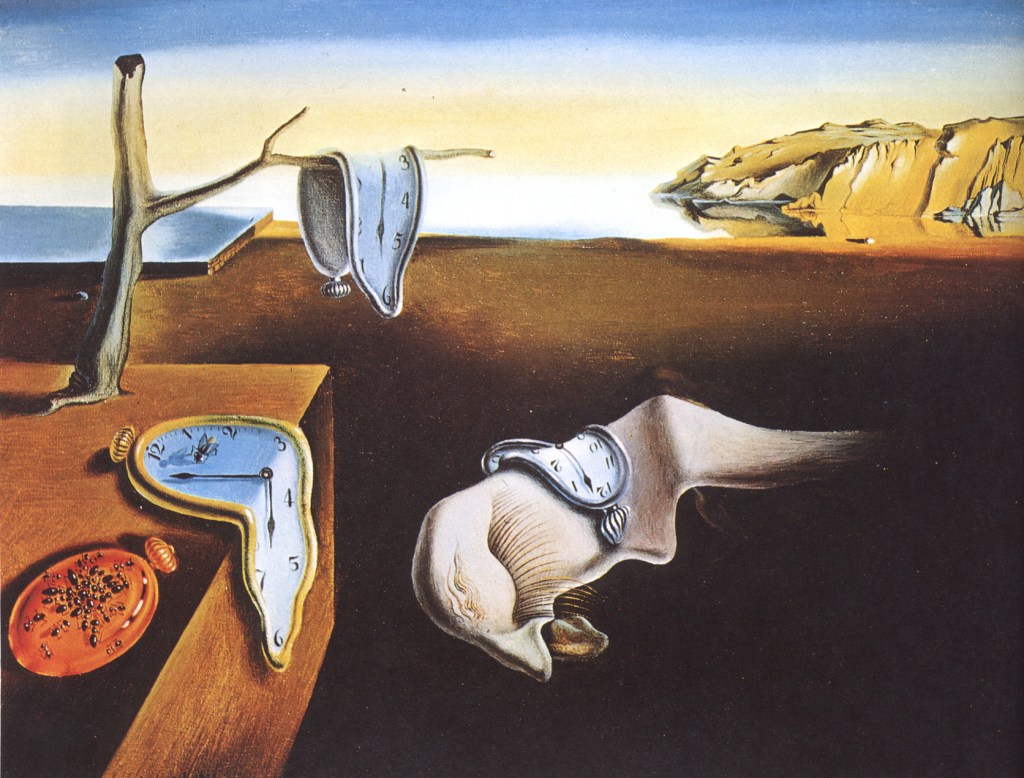
Salvador Dalí’s “The Persistence of Memory” stands as one of the most iconic and enigmatic works of art in the realm of surrealism. Painted in 1931 during the pinnacle of Dalí’s career, this masterpiece continues to captivate audiences worldwide with its dreamlike imagery and profound symbolism. Through a meticulous examination of time, space, and the subconscious mind, Dalí invites viewers to embark on a journey into the depths of the human psyche.
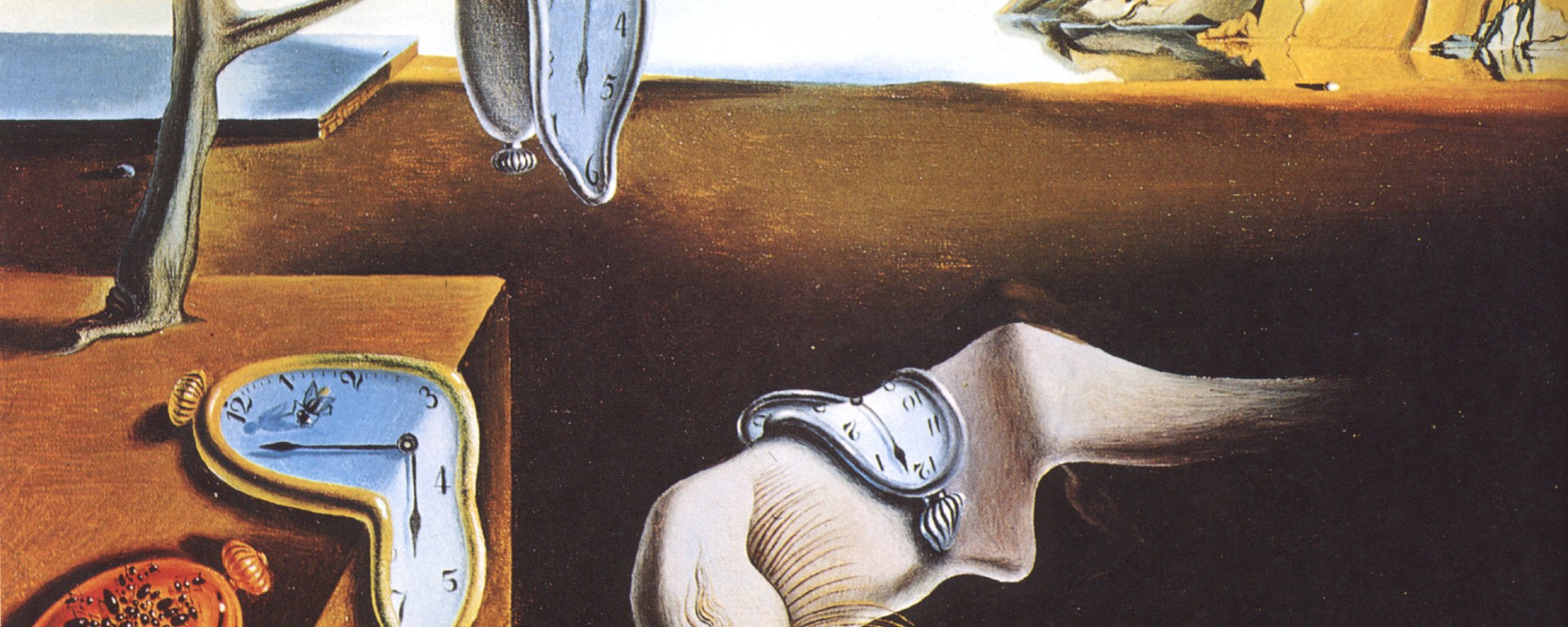
At first glance, “The Persistence of Memory” presents a landscape that defies the laws of reality. In the foreground, soft, melting clocks drape themselves over various objects like gnarled branches, while a solitary figure draped in the fabric of time seems to wilt under the weight of its passage. The scene unfolds against a desolate backdrop of a rocky shoreline, where the distant horizon merges seamlessly with the vast expanse of the sky. Yet, amidst this surreal tableau, there exists a strange sense of harmony and coherence, drawing viewers into its mysterious allure.
One of the most striking elements of the painting is the depiction of the melting clocks. These seemingly limp and malleable timepieces defy the conventional notion of time as an immutable force. Instead, they appear to wilt and liquefy, symbolizing the fluidity and subjectivity of temporal experience. Dalí himself described these drooping clocks as “the camembert of time,” suggesting a surreal blend of the mundane and the metaphysical.
The presence of ants crawling over the clocks adds another layer of intrigue to the composition. Often interpreted as symbols of decay and mortality, these insects evoke a sense of transience and impermanence in the face of time’s relentless march. Yet, their orderly procession also hints at a deeper sense of order and rhythm underlying the chaos of existence.
Central to the composition is the enigmatic figure draped across the foreground. While often interpreted as a self-portrait of the artist himself, this ambiguous silhouette serves as a cipher for the human condition in the face of temporal uncertainty. With its hollowed-out form and soft contours, the figure appears to dissolve into the landscape, blurring the boundaries between self and environment.
“The Persistence of Memory” is steeped in the tradition of surrealism, a movement that sought to liberate the unconscious mind from the constraints of rational thought. Drawing inspiration from dreams, Freudian psychoanalysis, and the burgeoning field of quantum physics, Dalí crafted a visual language that transcends the confines of linear time and logical coherence.
The enduring appeal of “The Persistence of Memory” lies in its ability to provoke contemplation and introspection. By challenging our preconceived notions of reality and time, Dalí invites viewers to question the nature of existence itself. In a world marked by constant change and uncertainty, this timeless masterpiece serves as a poignant reminder of the ephemeral nature of life and the enduring power of the human imagination.
As we gaze upon the melting clocks and wandering ants of “The Persistence of Memory,” we are confronted with the immutable truth of our own mortality. Yet, amidst the chaos and flux of existence, there exists a quiet beauty—a fleeting moment of respite amidst the ceaseless passage of time. In the end, perhaps it is this delicate balance between order and chaos, permanence and impermanence, that defines the enduring allure of Dalí’s masterpiece.
 rtnews