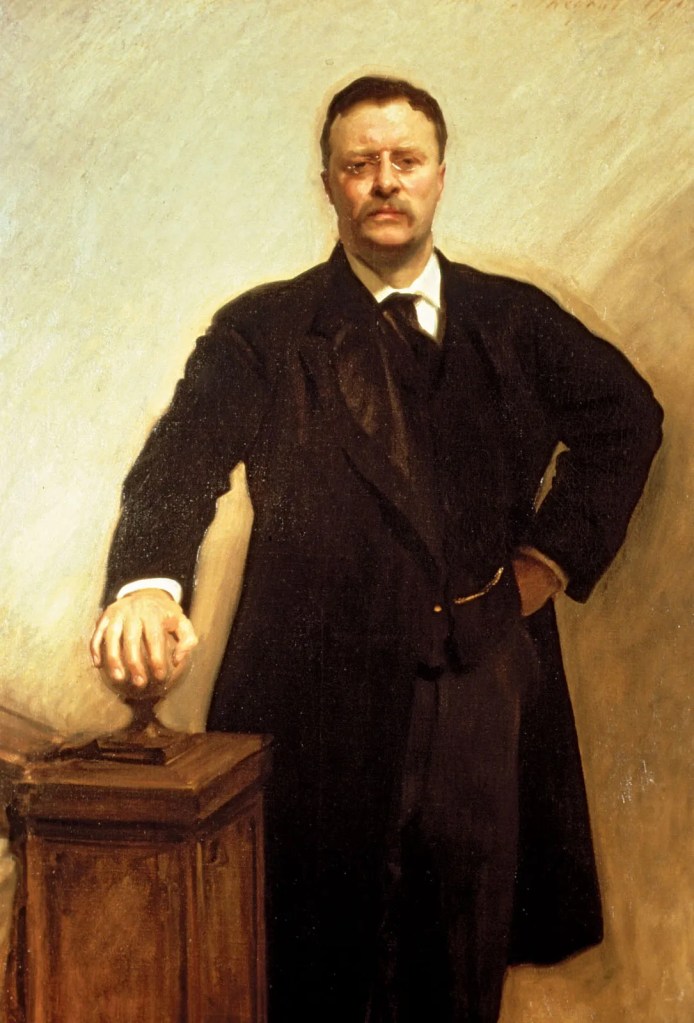
The youngest person to assume the office of the President of the United States was Theodore Roosevelt. He became president at the age of 42 years and 322 days after the assassination of President William McKinley in 1901. Theodore Roosevelt served as the 26th President from September 14, 1901, to March 4, 1909. He entered office at a relatively young age, and during his presidency, he became known for his progressive policies and energetic leadership, earning him a lasting place in American history.
Historical Events In Rosevelt’s Presidency
1. The Square Deal (1901-1909):
- Theodore Roosevelt’s domestic policy, known as the Square Deal, aimed to strike a balance between labor and capital, addressing the social and economic issues arising from industrialization. This included trust-busting activities to regulate big businesses and promote fair competition.
2. Anthracite Coal Strike (1902):
- In 1902, a coal strike threatened the nation’s fuel supply. Theodore Roosevelt intervened, inviting both labor and management to the White House. His mediation led to a resolution that improved working conditions and established the precedent for presidential involvement in labor disputes.
3. Pure Food and Drug Act and Meat Inspection Act (1906):
- Roosevelt championed consumer protection through the Pure Food and Drug Act and the Meat Inspection Act, both enacted in 1906. These laws aimed to regulate the food and pharmaceutical industries, ensuring the safety and quality of products.
4. Conservation Movement (1901-1909):
- Roosevelt was a staunch advocate for conservation. He expanded the National Parks system, creating new parks and monuments. The Antiquities Act of 1906 allowed him to designate public lands as national monuments, preserving natural resources and promoting responsible land management.
5. Panama Canal Construction (1904-1914):
- One of the most significant engineering feats of the era was the construction of the Panama Canal. Roosevelt played a pivotal role in the canal’s construction, securing the rights from the French company and overseeing the project that connected the Atlantic and Pacific Oceans.
6. The Russo-Japanese War Mediation (1905):
- Roosevelt’s diplomatic efforts in mediating the end of the Russo-Japanese War earned him the Nobel Peace Prize in 1906. His negotiations resulted in the Treaty of Portsmouth, demonstrating the United States’ emerging role as a mediator on the world stage.
7. The Great White Fleet (1907-1909):
- To showcase American naval power and project influence globally, Roosevelt dispatched the Great White Fleet—a fleet of 16 white-painted battleships—on a world tour. This naval demonstration aimed to assert the United States as a major player in international affairs.
8. Panic of 1907:
- The Panic of 1907 was a financial crisis that led to a run on banks and a severe economic downturn. Roosevelt’s response included assembling financial leaders at the White House and encouraging J.P. Morgan to stabilize the banking system, marking an early form of government intervention during economic crises.
9. Gentlemen’s Agreement (1907-1908):
- Addressing tensions between the United States and Japan, Roosevelt brokered the Gentlemen’s Agreement, an informal understanding that eased Japanese immigration to the U.S. in exchange for Japan’s voluntary restriction of emigration to America.
10. Roosevelt’s Decision Not to Seek Re-election (1908):
- In 1908, Theodore Roosevelt chose not to seek re-election, adhering to the tradition of two terms set by George Washington. He supported William Howard Taft as his successor, but their political differences eventually led to a strained relationship.
The President’s Life
At the dawn of the 20th century, the United States witnessed the rise of a charismatic and dynamic leader whose presidency would leave an indelible mark on the nation. Theodore Roosevelt, the 26th President, assumed office in the wake of tragedy and went on to redefine the role of the presidency. From his commitment to progressive reforms to his bold approach to foreign policy, Roosevelt’s tenure shaped the trajectory of the United States during a pivotal era.
Progressive Reforms:
Theodore Roosevelt, often affectionately known as “Teddy,” was a champion of progressive ideals. He believed in the power of government to address societal issues and curb the excesses of industrialization. His domestic policy, known as the Square Deal, aimed to strike a balance between capital and labor, business and consumers. Under his leadership, antitrust laws were enforced, and regulatory agencies, such as the Pure Food and Drug Act, were established to protect the public from unscrupulous business practices.
Conservation and Environmental Legacy:
Roosevelt was a staunch advocate for conservation, recognizing the importance of preserving America’s natural resources for future generations. During his presidency, he expanded the National Parks system, creating five new parks, and established the United States Forest Service. His dedication to conservation laid the groundwork for future environmental policies and underscored the importance of responsible stewardship of the nation’s natural treasures.
The Panama Canal:
One of the most ambitious projects of Roosevelt’s presidency was the construction of the Panama Canal. The canal, completed in 1914, connected the Atlantic and Pacific Oceans, significantly reducing travel time for ships and bolstering global trade. Roosevelt’s leadership in the canal’s construction showcased both his commitment to infrastructure development and his assertive approach to foreign policy.
Foreign Policy and the Big Stick Diplomacy:
Roosevelt’s foreign policy, often characterized as “Big Stick Diplomacy,” emphasized a strong military presence as a means to negotiate effectively. He mediated an end to the Russo-Japanese War, earning him the Nobel Peace Prize in 1906. The Roosevelt Corollary to the Monroe Doctrine asserted U.S. intervention in Latin America to prevent European powers from interfering. His diplomatic prowess solidified the United States as a major player on the world stage.
Legacy and Continued Influence:
Theodore Roosevelt’s presidency left an enduring legacy that extended beyond his time in office. His commitment to progressivism, environmental conservation, and assertive foreign policy set the stage for future leaders. The Rough Rider, as he was known from his military service in the Spanish-American War, remains an iconic figure in American history, remembered for his energy, vision, and dedication to the principles that shaped the nation.
As the 26th President of the United States, Theodore Roosevelt’s presidency was a pivotal period marked by progressive reforms, bold foreign policy initiatives, and a steadfast commitment to conservation. His legacy continues to resonate, and the impact of his presidency is evident in the lasting institutions and policies that shaped the course of the nation in the early 20th century.
 rtnews