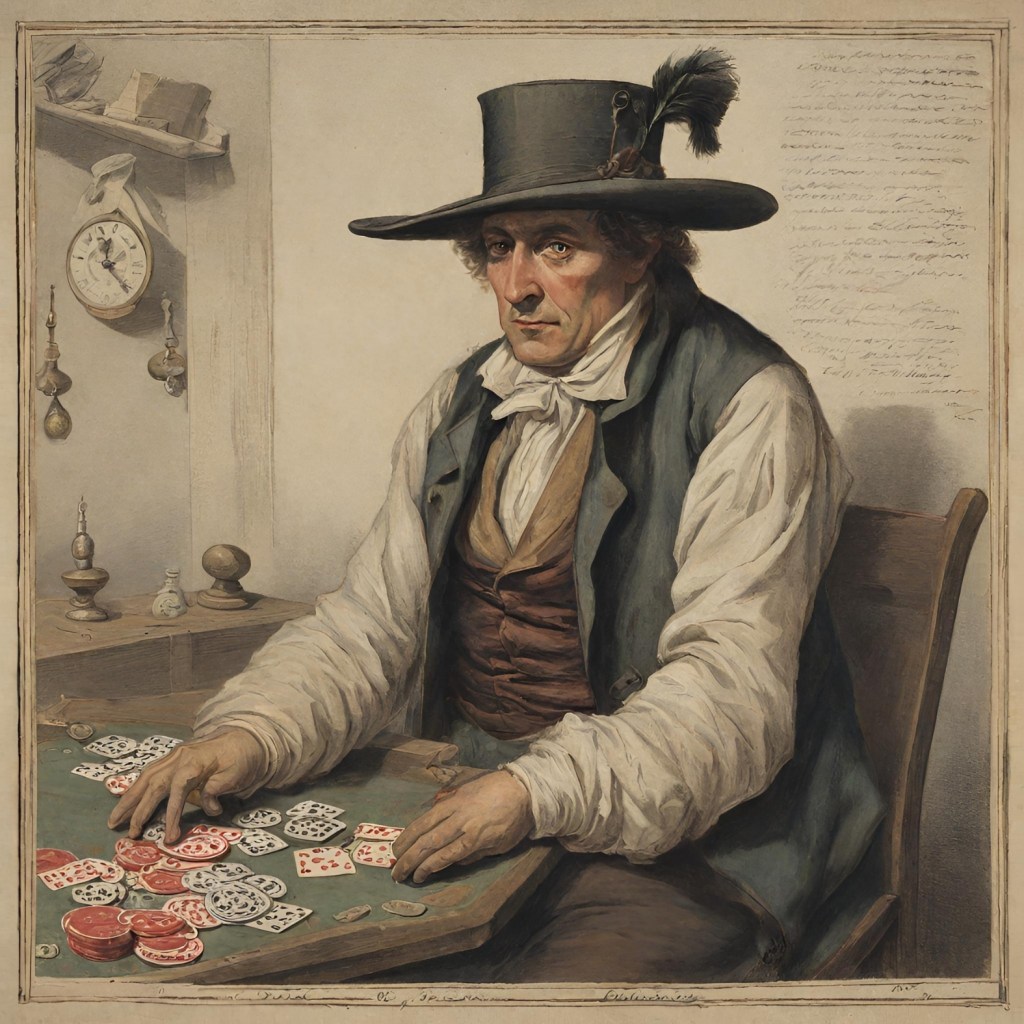
Why does a person play more gambling as they lose? Or rather, why is a person never satisfied with losing? Perhaps it’s because people never give up hope during their lifetime, as the end of hope means the end of life, actually. That’s why they say everything has a charm except death, because humans hope, work, or want to believe. When it comes to gambling, the possibility of suddenly becoming rich makes poor people happy in every way, perhaps even giving them the illusion of happiness. Because according to their beliefs, money will solve all the problems they face. Dostoevsky explains it in this way:
“With one turn of the wheel, everything changes instantly, and those who come to congratulate me jokingly (I am sure of it) become moralists. Then they won’t turn away from me as they do now.”
Here, moralists refer to those who criticize him for playing gambling. Because those who criticize you actually criticize what they themselves cannot muster the courage to do. Living life as it should be lived requires courage; life treats the brave differently. This work does not only progress through the mistakes and gains of the gambler, of course. One particularly striking character is French: a true gentleman. Although criticized as a polite fool in many parts of the book, as we approach the final pages, analyses showing how French culture differs from and is actually ahead of all European cultures gain prominence.
“The national style of a Frenchman, that is, a Parisian, had already become elegant when we were still BEARS. The Revolution became the heir of the aristocracy. Now, even in the most inferior Frenchman, there can be elegant gestures, expressions, manners, and even thoughts without any contribution from his intellect, spirit, or heart. He has acquired all this through inheritance.”
The part I enjoyed most while reading the book was especially this passage. An excellent analysis indeed, the elegance, nobility, and language skills in a Frenchman are truly a rare occurrence in other European countries.
The psychology of gambling and a gambler is a complex and multifaceted subject that encompasses various cognitive, emotional, and behavioral aspects. Fyodor Dostoevsky’s work, “The Gambler,” provides insights into the intricate workings of the human mind when it comes to the world of gambling.
Hope as a Driving Force: Dostoevsky suggests that hope plays a pivotal role in the gambler’s mindset. The prospect of winning, even after repeated losses, keeps individuals engaged in the activity.Desperation as a Motivator On the flip side, desperation can drive people to gamble more recklessly. The belief that a big win will solve all problems can lead to a cycle of increasingly risky behavior. Risk and Reward:Instant Gratification: Gambling offers the allure of quick and substantial rewards. The possibility of sudden wealth can be a powerful motivator, overshadowing the rational assessment of risks involved. Risk-Taking BehaviorThe gambler is often characterized by a willingness to take significant risks. This propensity for risk can be rooted in a desire for excitement, the thrill of uncertainty, or an escape from mundane realities. Psychological Coping Mechanisms:Escapism: Gambling can serve as a form of escapism from life’s challenges. The temporary suspension of reality during the game provides a break from stressors.Cognitive Distortions Gamblers may engage in cognitive distortions, such as the illusion of control or the gambler’s fallacy, which can impact decision-making and perpetuate the gambling cycle.
Social and Cultural Influences: Stigma and Criticism The novel touches upon the societal stigma associated with gambling. The criticism faced by the gambler, as depicted by Dostoevsky, reflects broader societal norms and judgments about the morality of such activities.Cultural Factors The book also explores how cultural backgrounds can shape attitudes toward gambling, with a focus on the contrast between French and other European cultures. The Gambler’s Identity:Self-Perception: The gambler’s identity is often entwined with their success or failure in gambling. Winning can enhance self-esteem, while losses may lead to feelings of shame and inadequacy.
 rtnews