
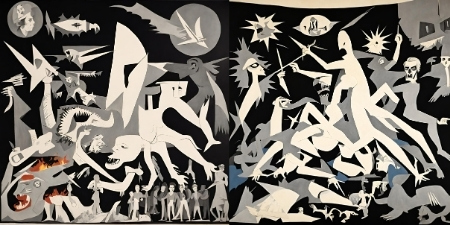
The 20th century was undeniably a period marked by extreme historical events that shaped the course of human history. Comparing the extreme events of the 20th century with those of the 21st century provides a valuable perspective on the evolution of global dynamics and societal changes.
- World Wars vs. 21st Century Conflicts:
- 20th Century: The two World Wars were unparalleled in their scale and impact, reshaping political boundaries and leading to significant geopolitical shifts.
- 21st Century: While the 21st century has seen conflicts like the War on Terror and regional disputes, it lacks the all-encompassing scale of the World Wars. Instead, unconventional warfare, cyber threats, and terrorism have become central challenges.
- Technological Advancements:
- 20th Century: The 20th century saw the rise of nuclear technology, the space race, and the advent of the internet.
- 21st Century: Technological progress has accelerated exponentially, with breakthroughs in AI, genetic engineering, and space exploration (e.g., private companies like SpaceX). The internet has evolved into a powerful force shaping social and political landscapes.
- Pandemics:
- 20th Century: The Spanish Flu of 1918 was a devastating pandemic with global consequences, impacting millions of lives.
- 21st Century: The COVID-19 pandemic, while reminiscent of historical pandemics, showcased a new level of global interconnectedness and the rapid response of science and technology in vaccine development.
- Social Movements:
- 20th Century: The Civil Rights Movement, feminist movements, and anti-Vietnam War protests were central to societal shifts.
- 21st Century: Movements like #BlackLivesMatter and #MeToo, while building on past struggles, leverage technology and social media for unprecedented global reach and impact.
- Space Exploration:
- 20th Century: The Space Race between the United States and the Soviet Union culminated in the 1969 moon landing.
- 21st Century: Private companies, rather than nation-states, are driving space exploration, with initiatives like SpaceX aiming for Mars colonization.
- Climate Change Awareness:
- 20th Century: Environmental awareness gained momentum, but the true scale of climate change’s impact became apparent in the 21st century.
- 21st Century: Climate change is recognized as a critical global challenge, prompting international agreements and grassroots movements for sustainability.
- Political Paradigm Shifts:
- 20th Century: Ideological conflicts, including the Cold War, defined global politics.
- 21st Century: The rise of populism, shifts in global alliances, and the challenges to traditional democracy characterize the 21st-century political landscape.
In summary, while the 20th century was marked by monumental global conflicts, the 21st century exhibits a different set of challenges and transformations. The interconnectedness facilitated by technology, the focus on unconventional threats, and the empowerment of grassroots movements distinguish the 21st century as an age of extremes with its own unique dynamics.
The 21st century has emerged as an age of extremes, marked by unprecedented technological advancements, global challenges, and societal transformations. While headlines often focus on the extraordinary events that shape our world, it is crucial to explore the ordinary history that unfolds amidst the chaos. In this article, we delve into the nuances of the 21st century, examining both the extraordinary and the ordinary elements that define this era.
Technological Marvels and Everyday Innovations
One of the defining features of the 21st century is the rapid pace of technological innovation. Breakthroughs in artificial intelligence, biotechnology, and renewable energy have captivated the world’s attention. Companies like SpaceX have made interplanetary travel seem within reach, while advances in CRISPR technology have opened new frontiers in genetic engineering.
Amidst these grand narratives, there lies a tapestry of ordinary history—a world shaped by everyday technologies that have seamlessly integrated into our lives. Smartphones, social media platforms, and e-commerce have become indispensable tools, connecting people across the globe. The ordinary act of scrolling through a news feed or ordering groceries online has transformed the way we live, work, and interact.
Global Challenges and Grassroots Movements
The 21st century has witnessed a surge in global challenges, from climate change and pandemics to geopolitical tensions. While these issues dominate international headlines, ordinary people have risen to the occasion through grassroots movements and collective action.
Environmental activists, inspired by the urgency of climate change, have mobilized millions in a call for sustainable practices. Ordinary citizens have harnessed the power of social media to organize protests, share information, and amplify their voices. The Arab Spring, Occupy Wall Street, and the #BlackLivesMatter movement are testament to the ordinary history being made by individuals striving for a more just and equitable world.
Pandemics and Resilience
The COVID-19 pandemic, a defining event of the 21st century, underscored the fragility of our interconnected world. While the extraordinary efforts of scientists and healthcare professionals in developing vaccines captured headlines, the pandemic also revealed the resilience and adaptability of ordinary people.
Communities came together to support one another through mutual aid groups, local initiatives, and acts of kindness. The ordinary heroes emerged—frontline workers, teachers navigating remote learning, and individuals finding innovative ways to stay connected despite physical distance. This collective resilience is a testament to the strength of the human spirit in the face of adversity.
Cultural Shifts and Social Movements
The 21st century has witnessed significant cultural shifts, challenging traditional norms and fostering inclusivity. The #MeToo movement brought conversations about sexual harassment and assault into the mainstream, empowering survivors to share their stories. LGBTQ+ rights gained momentum globally, leading to legal victories and greater acceptance.
In the midst of these extraordinary transformations, the ordinary history of individuals embracing diversity and challenging stereotypes has shaped a more inclusive world. Everyday acts of empathy, understanding, and advocacy have contributed to the ongoing evolution of societal norms.
As we navigate the 21st century, it is essential to recognize the ordinary history unfolding alongside the extraordinary events that shape our world. While technological marvels and global challenges capture our attention, the everyday innovations, grassroots movements, resilience in the face of crises, and cultural shifts are equally significant.
In this age of extremes, the ordinary acts of individuals collectively contribute to the tapestry of our shared history. It is through these everyday stories that we find hope, inspiration, and the potential to create a more balanced and harmonious world.
 rtnews