
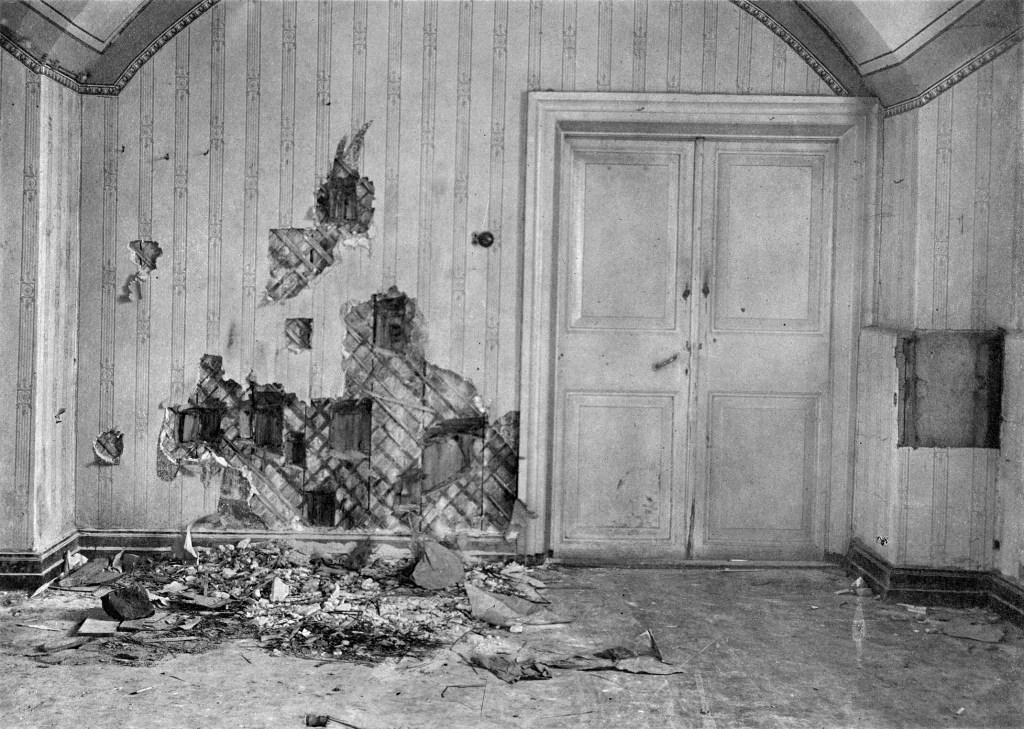
Anastacia means reborn also the poor daughter of the last Czars, who was killed in the basement of The house of special purpose. According to the academians, the royal family stştched all pieces of jewellery inside their clothes it just made a shield from diamonds and rubies this made the execution harder and made the death longer. This was a horrible execution in the world and at the last minute, all the family believed they would dispose of the being such a prisoner.
This end seems awful but before that, the last Czars’ overdue lounges, and irrational decisions brought them here and changed all life, the map, the economy and of course regime of the Russia. Politicians are people too, and if they stay away from their people soon or later crises start, bigger and bigger so a manager of a company, a president of a state or an emperor of a monarchy should be known about what people need, where they became and what will they become in the future. Unfortunately, the Czars weren’t aware of these problems until they burned one’s bridges. Hard times make successful people, successful people make the community better and decrease prosperity. This rich and high prosperity creates weak people, and weak people cause bad conditions. Unfortunately, the clueless members of the royal families just before the First World War can’t be ignored. The decreasing in joblessness and nationalist movements were getting bigger and bigger in the real world, we mean out of the palace’s walls. To hear at according to Machiavelli the prince (cpnqeur) must be in the people’s change to vision, and should measure the tension before it becomes unmanageable.
Who Is The Anastacia Romanov?

Anastasia Romanov, the youngest daughter of Tsar Nicholas II of Russia, was born on June 18, 1901, in the Peter and Paul Fortress in St. Petersburg. She was the fourth and final daughter of the Romanov family, which also included her three sisters—Olga, Tatiana, and Maria—and her brother Alexei. Anastasia’s early life was one of privilege, surrounded by the opulence of the Russian Imperial Court. However, her world dramatically changed with the outbreak of World War I and the Russian Revolution in 1917. The Bolsheviks seized power, leading to the abdication of Tsar Nicholas II and the eventual imprisonment of the Romanov family.
In 1918, the Romanovs were moved to Ekaterinburg, where they were held under house arrest. The following year, as the Russian Civil War intensified, the Bolsheviks decided to execute the Romanovs to prevent their rescue by the White Army, their monarchist opponents. On July 17, 1918, Anastasia, along with her family and a few loyal servants, was executed by a firing squad in the basement of the Ipatiev House. For decades, rumours persisted that Anastasia might have survived the execution. These rumours were fueled by the discovery of the Romanovs’ bodies in a mass grave in Ekaterinburg in 1991. Initially, Anastasia and her brother Alexei were missing from the grave, leading to speculation that they had somehow escaped. In 2007, a second grave was discovered containing the remains of two additional bodies—believed to be Anastasia and Alexei—near Ekaterinburg. DNA analysis confirmed their identities, dispelling the notion that Anastasia had miraculously survived. The remains of the Romanovs were interred in St. Petersburg in 1998, and they were canonized by the Russian Orthodox Church Outside Russia as martyrs in 1981. The Russian Orthodox Church inside Russia canonized them in 2000.
While the idea of Anastasia’s escape captured the imagination of many, the scientific evidence and historical records overwhelmingly support the conclusion that she, along with her family, tragically perished in 1918. The story of Anastasia and the Romanovs continues to be a poignant and enduring chapter in Russian history.
Who is The Romanov Family?
The Romanov family was the last imperial dynasty to rule Russia. The family’s reign began in 1613 with the election of Mikhail Romanov as the Tsar of Russia, following the end of the Time of Troubles. The Romanov dynasty continued for over three centuries until the Russian Revolution of 1917. The most well-known and recent members of the Romanov family were Tsar Nicholas II, his wife Alexandra, and their five children: Olga, Tatiana, Maria, Anastasia, and Alexei. Nicholas II ascended to the throne in 1894 and was the last Tsar of Russia. His rule was marked by political and social upheavals, including the Russo-Japanese War and World War I, which ultimately contributed to the fall of the Romanov dynasty. The Russian Revolution of 1917 led to the abdication of Nicholas II in March of that year. The Bolsheviks, led by Vladimir Lenin, came to power, and the Romanov family was initially held in captivity. In 1918, amidst the Russian Civil War, the Romanovs were executed by a firing squad in Ekaterinburg. The fate of the Romanovs remained a mystery for many years, and rumours of their survival persisted. In 1991, the remains of the Romanov family were discovered in a mass grave in Ekaterinburg. Subsequent DNA analysis confirmed their identities, dispelling the lingering myths of possible survival.
The tragic end of the Romanovs is a significant chapter in Russian history and marks the conclusion of the imperial era. The Russian Orthodox Church Outside Russia canonized the Romanovs as martyrs in 1981, and the Russian Orthodox Church inside Russia followed suit in 2000. The family’s story has inspired numerous books, movies, and documentaries, and their legacy continues to be a subject of historical and cultural interest.
 rtnews