Introduction
Sokrates, an esteemed philosopher in ancient Athens, is renowned not only for his profound philosophical ideas but also for his eloquent defense presented during his trial. This exceptional defense not only contested the accusations brought against him but also left a profound imprint on the annals of philosophy. In this scholarly exposition, we shall delve into the intricacies of Sokrates’ defense, his character, and the enduring influence of his philosophical doctrines.
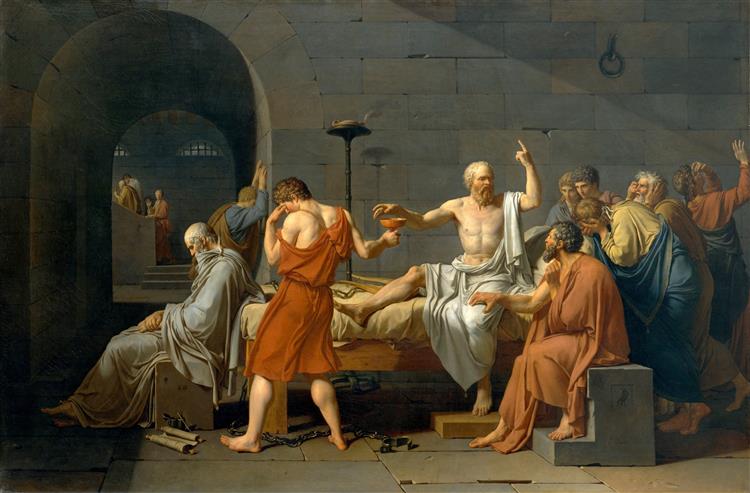
The Accusations
Sokrates’ trial stemmed from several grave accusations, encompassing charges of impiety and corrupting the youth of Athens. His defense exhibited a masterful rebuttal to each charge, uncovering the contradictions and incongruities within the claims made by his accusers.
Impiety and Atheism
One of the most prominent allegations against Sokrates revolved around charges of impiety and atheism. His accusers contended that he not only denied the existence of the traditional gods but also paradoxically accused him of introducing novel deities. In his defense, Sokrates astutely highlighted that if he were, in fact, an atheist, he would not be promoting new deities. He also underscored the fact that earlier philosophers, such as Anaxagoras, had encountered analogous accusations for their scrutiny of conventional beliefs about the divine.
Challenging Established Beliefs
Sokrates’ audacious inquiries extended beyond the realm of traditional gods. He ventured to argue that celestial bodies, including the Sun and the Moon, were not divine, inviting further accusations of undermining prevailing beliefs and moral standards. Sokrates, however, counteracted these allegations by emphasizing that if he had the potential to mislead people, predecessors had already engaged in similar endeavors, and a significant portion of society subscribed to comparable perspectives. This collective body of knowledge rendered it highly improbable for him to lead people astray.
The Enduring Impact of Sokrates’ Defense
Sokrates’ defense yielded far-reaching ramifications and persists in its influence on successive generations of thinkers and scholars. Let us explore some of the salient takeaways from his defense:
- The Pursuit of Truth: Sokrates ardently underscored the primacy of seeking truth above all else. He steadfastly believed that open discourse and critical thinking were indispensable in the quest for knowledge.
- The Value of Personal Integrity: Sokrates’ unwavering adherence to his convictions, even when facing imminent mortality, serves as a testament to the significance of upholding personal integrity and principles.
- A Stand Against Injustice: Sokrates’ preparedness to face execution rather than compromise his principles imparts a lasting example of resisting injustice and oppression.
- Inspiring Future Philosophers: Sokrates’ philosophical tenets and his method of dialectical questioning laid the groundwork for Western philosophy. His influence is notably evident in the works of his pupil, Plato, and in the myriad philosophers who followed in their intellectual footsteps.
Original Dialogues of Sokrates
Sokrates’ defense was characterized by eloquence and an unwavering commitment to his principles. He addressed his accusers with defiance, often leaving them befuddled and unable to refute his arguments. Here are selected excerpts from Sokrates’ original dialogues during his trial:
Sokrates famously asserted: “If eternal slumber awaits, there is no trouble. On the other hand, if death signifies passage to another realm, then in this regard, I will partake in discourse and debate with notable poets, philosophers, and great minds who have gone before, for such individuals are recognized for their wisdom. Thus, I shall confront them one by one and ascertain which among us is truly the wiser.”
Sokrates also challenged the accusations by arguing: “Consider, we are still talking about Sokrates telling the truth. If I were indeed a corrupter of the youth, as it has been alleged, it would have come to light a long time ago. Such young people, as have reached maturity and realized that I gave them poor counsel in their formative years, would have stepped forward to hold me accountable. He meticulously deconstructed each allegation, demonstrating that, if taken at face value, they would lead to insurmountable contradictions.”
Sokrates’ parting words, replete with sagacity, were: “If eternal slumber awaits, there is no trouble. On the other hand, if death signifies passage to another realm, then in this regard, I will engage in discourse and debate with eminent poets, philosophers, and great minds. So, finally, the hour of separation has arrived. You will continue to live, while I shall depart this earthly realm. However, which of the two fates is the superior one, only the divine can ascertain.”
Sokrates’ defense and philosophical legacy endure as a perennial source of inspiration for contemporary and future thinkers. His unwavering dedication to truth, personal integrity, and the struggle against injustice remains indispensable in the realm of philosophy and beyond. Sokrates undeniably etched an indelible mark on the annals of human intellectual history.
Sokrates’ defense remains a timeless testament to philosophical courage, an unyielding commitment to truth, and the enduring pursuit of knowledge. In the face of grave accusations, he fearlessly challenged conventional beliefs, highlighting inconsistencies and contradictions with eloquence and wisdom. Sokrates’ legacy continues to inspire thinkers and scholars across the ages, emphasizing the value of personal integrity and the importance of standing up against injustice. His philosophical journey laid the foundation for Western philosophy, influencing countless generations of intellectuals. Sokrates’ enduring impact reminds us of the power of critical thinking and the pursuit of truth, proving that even in the most challenging circumstances, the quest for wisdom can transcend time and place.
 rtnews