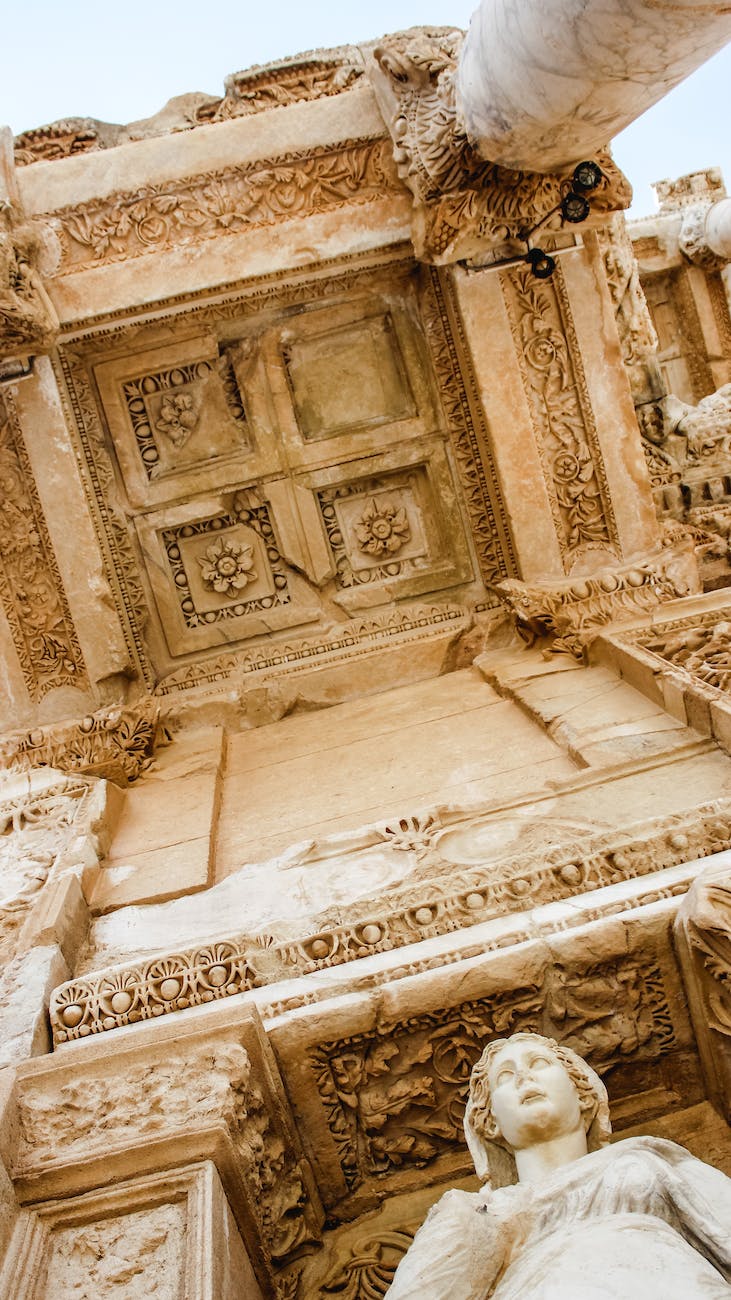
The Roman Empire, one of the most influential and enduring civilizations in human history, produced a remarkable lineage of emperors and generals who left an indelible mark on the world. These leaders possessed the charisma, military prowess, and administrative acumen necessary to expand and sustain the empire’s power. In this article, we will explore some of the most powerful emperors and generals in Roman history, along with the formidable women who played crucial roles in their lives.
- Gaius Julius Caesar (100 BC – 44 BC):
Julius Caesar, a military genius and a brilliant politician, holds a prominent place in Roman history. He is often regarded as the catalyst for the transition from the Roman Republic to the Roman Empire. Caesar’s conquests in Gaul, his bold crossing of the Rubicon, and his assassination in 44 BC by political rivals are defining moments in Roman history. His affair with Cleopatra, the Queen of Egypt, also illustrates the intertwining of personal and political power in the ancient world.
Cleopatra and Caesar: Cleopatra, a highly intelligent and charismatic queen, wielded her charm to gain favor with Julius Caesar. Their relationship not only changed the political landscape of Rome but also solidified her position as a significant historical figure.
- Augustus Caesar (63 BC – 14 AD):
Augustus, the great-nephew of Julius Caesar, is considered the first Roman Emperor. His reign marked the beginning of the Pax Romana, a period of relative peace and stability that lasted for two centuries. Augustus was not just a brilliant strategist but also a masterful administrator. His wife, Livia, is renowned for her political influence and her role in securing Augustus’s dynasty.
Livia and Augustus: Livia, as the first empress of Rome, played an essential role in her husband’s reign. She helped ensure the smooth transition from the Roman Republic to the Roman Empire and managed various aspects of the imperial administration.
- Trajan (53-117 AD):
Trajan is often celebrated as one of the “Five Good Emperors” who ruled during the height of the Roman Empire. His military campaigns, which expanded the empire to its greatest territorial extent, are a testament to his military prowess. However, his wife, Plotina, played a pivotal role as a wise and supportive empress.
Plotina and Trajan: Plotina was known for her wisdom and her influence on her husband’s decisions. She was instrumental in shaping Trajan’s image as a just and capable ruler.
- Hadrian (76-138 AD):
Hadrian, another of the “Five Good Emperors,” is known for his consolidation and fortification of the empire’s borders. His Wall in Britain and the Pantheon in Rome remain iconic symbols of Roman engineering and architecture. His wife, Vibia Sabina, is remembered for her influence on his decisions and her contributions to the arts.
Vibia Sabina and Hadrian: Vibia Sabina played a significant role in Hadrian’s life, serving as a stabilizing influence on his reign and supporting his artistic and architectural endeavors.
- Marcus Aurelius (121-180 AD):
Marcus Aurelius, often referred to as the “Philosopher-Emperor,” ruled during a challenging period of external threats and internal strife. His stoic philosophy and military campaigns against Germanic tribes demonstrate his wisdom and strength. His wife, Faustina the Younger, was a powerful empress who played an active role in imperial administration.
Faustina the Younger and Marcus Aurelius: Faustina the Younger was a trusted advisor and partner to Marcus Aurelius, and their marriage exemplified a strong partnership in both personal and political matters.
- Gnaeus Pompeius Magnus (106-48 BC):
Known as Pompey the Great, he was one of the most accomplished generals of his time. His alliance with Julius Caesar and subsequent rivalry exemplify the intricate political dynamics of the late Republic. His wife, Julia, was the daughter of Caesar, and their marriage was a political alliance aimed at stabilizing the empire.
Julia and Pompey: Julia, as the daughter of Julius Caesar and wife of Pompey, was at the center of the political intrigue that defined the final years of the Roman Republic.
Conclusion:
The Roman Empire’s history is replete with remarkable leaders who shaped the course of civilization. These emperors and generals, along with their influential wives, navigated the complex web of power, politics, and conquest. Their legacies continue to be celebrated as testaments to the Roman Empire’s enduring influence on the world, and their stories provide valuable insights into the dynamics of power and leadership in ancient Rome. The partnerships between these leaders and their spouses highlight the interplay between personal and political power that was integral to the rise and fall of the Roman Empire.
 rtnews