Introduction
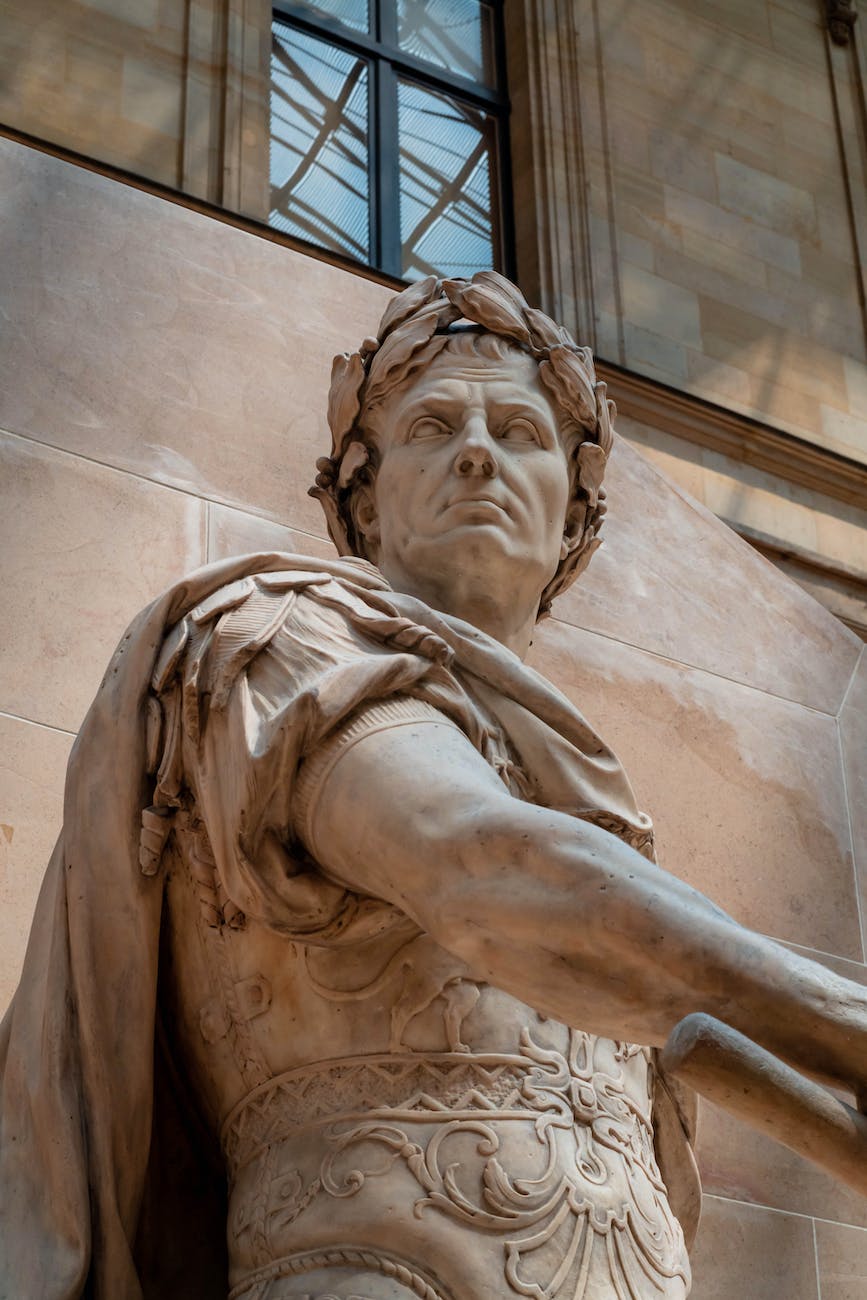
The Roman Empire, an iconic and influential civilization, stands as a testament to the enduring power of human ambition and conquest. Its ascent to glory, from the collapse of the Roman Republic to the dawn of its golden age, marks a pivotal moment in history. In this comprehensive exploration, we will delve into the history of the Roman Empire’s first 50 years, scrutinizing the key events, prominent figures, and the transformation of Rome from a republic to a dominant empire.
I. The Birth of an Empire (27 BC – 14 AD)
A. The Transition of Power
Our journey commences with the transition from the Roman Republic to the Roman Empire, a momentous turning point in history. This shift unfolded in 27 BC when Gaius Octavius, known to the world as Augustus, emerged as the inaugural Roman Emperor. We will explore the complex web of political intrigue and ambition that led to this seismic transition and the pivotal role played by Augustus in reshaping the destiny of Rome.
B. The Pax Romana
Under Augustus’s wise and enduring rule, Rome entered a period known as the Pax Romana—a time of relative peace and stability that allowed the empire to flourish. We will delve deep into the significance of this era, exploring the profound impact it had on Roman society and the remarkable achievements that characterized this golden age.

II. Conquests and Expansion (14 AD – 50 AD)
A. The Legacy of Augustus
The early years of the empire witnessed not only consolidation but also extensive territorial expansion. Augustus initiated a series of conquests that added vast new territories to the Roman Empire. We will examine his military campaigns, including the annexation of Egypt, and the strategic maneuvers employed to maintain control over these newly acquired lands.
B. Germania and the Teutoburg Forest
The Roman Empire’s expansion encountered numerous challenges. We will delve into the fateful campaign led by Publius Quinctilius Varus in Germania, culminating in the disastrous Battle of Teutoburg Forest. This catastrophic defeat left an enduring scar on Roman ambitions in the north.
C. The Julio-Claudian Dynasty
The succession of emperors who followed Augustus, including Tiberius, Caligula, Claudius, and Nero, brought a mix of competent governance and eccentric rule. We will closely examine the reigns of these emperors, their contributions to the empire, and the controversies and intrigues that marked their leadership.
III. Roman Society and Culture
A. The Roman Way of Life
To fully grasp the essence of the Roman Empire’s early years, it is essential to explore the intricacies of daily life, culture, and societal structures of this era. We will delve into the Roman class system, the routines of daily life, and the pivotal role of slavery in sustaining the empire’s prosperity.
B. Roman Art and Architecture
The Roman Empire’s indelible mark on art and architecture is a testament to its grandeur and sophistication. We will embark on a journey through the monumental architectural achievements, such as the Colosseum, the Pantheon, and the intricate aqueducts. Additionally, we will appreciate the artistic expressions that defined the era.
IV. Challenges and Crises
A. The Jewish-Roman Wars
The first 50 years of the Roman Empire bore witness to the profound and tumultuous Jewish-Roman Wars, which left an indelible impact on the empire’s relationship with Judea. We will discuss the causes of these conflicts, the destruction of the Second Temple, and the enduring consequences for both Rome and the Jewish people.
B. The Year of the Four Emperors
The Year of the Four Emperors, spanning from 69 AD to 70 AD, was a period of intense political turmoil and civil strife. We will meticulously dissect the power struggles and brief reigns of Galba, Otho, Vitellius, and Vespasian as they vied for supremacy over the empire.
V. Conclusion: The First 50 Years in Retrospect
As we conclude our captivating journey through the Roman Empire’s first 50 years, we shall reflect on the transformations, challenges, and achievements that marked this epoch. The empire’s expansion, the enduring contributions of key figures, and the societal and cultural developments all played a pivotal role in shaping the legacy of Rome. This era set the stage for the establishment of one of the most enduring empires in history, leaving a lasting imprint on the world.
The history of the Roman Empire’s first 50 years is an epic narrative of ambition, conquest, and the seeds of an empire that would span centuries. Its legacy endures, continuing to shape our world today, rendering it a topic of enduring interest and importance.
 rtnews