ABSTRACT
This study examines the process of the Kardak crisis, which has reached the brink of war in relations between Turkey and Greece. In this process, the struggle of Turkish diplomacy, military and diplomatic practices, the effects of the crisis on the Turkish domestic political media, the approach of the European Union Fuat Aksu “The future of Aegean problems and Turkey: Turkey’s options in the EU membership process”. On the one hand, the study objectively reflects Turkey’s cold-blooded attitude and peace-biased policy in a crisis escalated by Greece, which is trying to be reflected in the world as a Turkish state pursuing an occupying force or aggressive policy. At the same time, the Cardak crisis theses are the source of the steps that the European Union can take to solve or the policies that it follows to be part of the problem.
INTRODUCTION
The Kardak (Imia) crisis, which broke out at an unexpected moment, is a very important breaking point in the history of Turkey and Greece. One of the most difficult periods of Turkish diplomacy has been in the Kardak problem. In 1996, the Kardak crisis was added to our existing problems with Greece, which were not even close to solving a vicious circle. Fuat Aksu has mentioned in many articles that the European Union and its approaches, which claim to be the mediator force, are a very big factor in these problems, but he has explained the EU’s approaches in various schemes. 1, which is the most important approach to the solution that is important to us here. Is the schema. According to this scheme, the EU is equal to both Turkey and Greece, if this can happen, either the two countries must be EU members or both must not be accepted for membership. But the EU is far from this approach if it approaches Turkey within the framework of constant conditionality. It expresses the terms of permanent membership. According to these conditions, member states must resolve border issues or apply to the International Court of Justice after making the necessary efforts on the issue. But despite all these conditions, Turkey has made the Greek Administration of Southern Cyprus and Greece a member of the European Union, which constantly uses its veto power and already harbours potential hostility in this case Fuat Aksu 3. He summarized the event with a diagram. Turkey is now left alone in the face of the Greek Administration of the European Union + Greece + southern Cyprus. In other words, the European Union chose to be part of the problem, not the solution to the Aegean problems.*
THE MAIN SECTION
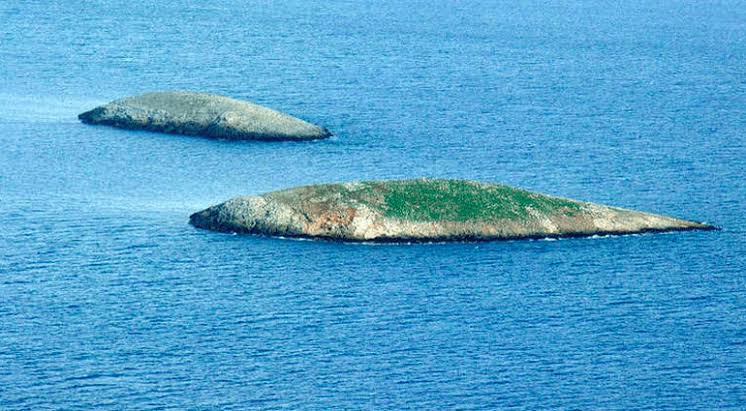
Kardak Cliffs are two small, barren cliffs in the middle of the Aegean Sea that have brought Turkey to face the Hellenic Republic and Europe. These two rocks are the cause of a land fight in the Aegean Sea that will be talked about for years. It has brought these two ancient nations, which are neighbours to each other and are the inheritors of their common culture, to be subject to war. Of course, this crisis is neither the first nor the last in the Aegean Sea. Before that, there were many issues that we did not agree with Greece in the first place, but it should be underlined that thanks to his successful diplomacy, Greece managed to Europeanize its problems. That is why the Turkish-Greek problems have become the problems of the European Union – Turkey over time. Examples of this situation are Cyprus and the continental shelf problem. In other words, before the Imia crisis, there were various problems in which tensions were high, but this issue was very effective because, in the words of US President Clinton of the era, “the world has much bigger problems than two cliffs. But Kardak has become a matter of honour for Turkey and the Hellenic Republic, albeit with Pebble literature*(çakıltaşı edebiyatı). The end of the war was reached, but in the end, thanks to the mediators and the cold-blooded attitude of Turkey, they finally returned from this path. In this crisis, the Republic of Turkey decided to fight. During this period, there was a series of harsh and pro-war political and military events that took place at unpredictable extremes. The politicians made their decision, they decided to go to war and get out of this crisis, and they asked the Foreign Ministry, ‘Are we right?” The Ministry of Foreign Affairs approved this decision and gave the politicians the right. The politicians then “ordered” the military, that is, the Turkish Armed Forces. The soldier was going to carry out this order as expected, but he added: ‘Do you risk a big war when you give this order?
Here I tried to sum up the last point where diplomacy came in the Kardak crisis. Now it is time for me to begin to examine this crisis in detail and to convey as objectively as possible this difficult period of Turkish diplomacy. Gümüşlük is a quiet settlement 45 minutes from the Greek island of Karinyos. Kardak rocks are located 3.5 miles from Gumusluk Bay and 5.5 miles from Karinyos, Kardak consists of two small pieces of rock. Turkey’s Kardak cliffs, which Greece calls Imia Island, are two barren cliffs in the middle of the Aegean Sea.
Kardak is in the middle of a Strait located at the crossing point, which almost resembles the highway used by Turkish ships in particular. At this point, it is located in the middle of a 12-mile distance between Greece and Turkey.
HOW DID THE CRISIS BEGIN? THE PROCESS
A freighter named Figen Akat ran aground on Kardak rocks on December 25, 1995, en route from Çanakkale to Israel. Along with this event, a critical question that has never been asked to date was raised:” To whom do Kardak (Imia) rocks belong? After that, Erim Akat immediately discussed the situation with an insurance company. The following evening, two Turkish officials went on board and began to consult on how to rescue the ship from this situation. It was at this time that the warships of the Republic of Turkey and Greece were anchored around the ship Figen Akat and were monitoring developments. The next day, the Greek ambassador gave a note to the Foreign Affairs of the Republic of Turkey: the freighter Figen Akat is in the territorial waters of Greece, immediately stopping the rescue process. But in response to this reaction, the Ministry of foreign affairs of the Republic of Turkey gave another note and rejected this claim.
On 27 December 1995, it was decided that 150 tons of cement loaded on board would be dumped into the sea to save the ship, and the rescue process would begin as soon as possible. Following this decision, around 100 tons of cement were poured into the sea on the morning of 27 December. A Greek Reporter watching the rescue from afar approached the ship in 3 attack boats next to it. Before long, Figen Akat was surrounded by Greek warships. The Greek soldier came aboard with his rifle and pistol in hand and ordered the ship’s crew to stop unloading. Thus, the rescue of Figen Akat was stopped. A Greek rescuer attached a steel rope to a ship called Figen Akat and pulled it from the cliffs, and at this time the steel rope became stuck in a mechanism called the ‘swivel’ of the ship. As the Greek authorities tried to save the rope, the ship’s personnel cut the steel rope so that the ship was released from good to good and quickly escaped into Turkish territorial waters. It had already taken them about 5 minutes to reach Turkish territorial waters. The ship was liberated and returned to Turkish territorial waters, but this event sparked a debate that would last for many years, and interest was considered and investigated, especially by the commander of the Naval Forces of the time, Güven Erkaya. By the time the dates showed January 10, 1996, the notes had already been given and Kardak had been forgotten, although no one on the Turkish side is likely to continue this work, Greece has not forgotten this issue. Days after the accident, Greece gave Turkey a second note. The note also claimed that Kardak was granted to Greece by an agreement between the Italians and Greece in 1932. After that, the Ministry of Foreign Affairs of Turkey began research on the status of Kardak. And so the land registry records showing that Kardak rocks belong to Turkey were found in a government office in Bodrum. According to these data, the Republic of Turkey once again gave a note to Greece. Kardak rocks were no longer just two pieces of rock standing in the Aegean, but a bomb ready to explode. The media soon became aware of the situation. On 19 January 1996, Simitis received a vote of confidence and was elected as the new prime minister of Greece. The next day, he filled the media with slogans saying that Greek territory was being withdrawn by the Turks to protect his political interests in the face of his opponents and began propaganda. 20 days after the accident, the mayor of Kalymnos ignited the wick. The mayor took the island’s pastor, his children and the filming crew of Antena, one of the leading Greek media channels, to the Kardak cliffs and planted the Greek flag on the island in a small ceremony accompanied by chants and Jokes. On the evening of that day, Greek media claimed that the Kardak Cliffs had been taken. On the same evening, the apocalypse broke out in Turkey, and the Kardak crisis was raised in the media as an important title. In response to the Greek offensive, the Turkish press responded by landing a helicopter on the Kardak cliffs. Two Turkish journalists took down the Greek flag on the Kardak cliffs and planted the Turkish flag in its place. Before the evening, Turkish media made the news public. Kardak cliffs were no longer just a foreign policy problem, but also a domestic policy problem, the people were carefully following the steps taken by the government. Now that the Kardak crisis was on the agenda of the world, one of the Turkish diplomats made a statement outlining that Turkey was keeping its composure and that they were not pro-war, unlike Greece, and that Turkey was not in a race to plant a flag with Greece. It was a very tense period in Turkey, politicians were silent, while soldiers and diplomas were watching the flow of events and developments with concern. In any case, Turkey managed this crisis very well, despite Greece’s vague and harsh moves. :
· He was on the way to reconciliation so as not to escalate the dispute,
· Did not lose his composure
But Greece did not agree with the Turkish Republic on this issue, in order not to lose both votes and reputation, Simitis followed an aggressive and pro-war policy, as a result, he pulled out armed Special Greek military units on the Kardak rocks and again lowered the Turkish flags and planted the Greek flags.
Even so, the Ministry of Foreign advanced Deniz Baykal Ankara and entered foreign diplomats and led a very painful process, especially to protect the honour and reputation of Turkey given the diplomatic war that is admirable. Although Freckles wanted to postpone this operation as a result of his meetings with Clinton, the decision to withdraw troops under the pressure of Deniz Baykal, who could see in advance that this move would make Turkey easier to make concessions on future problems and would lead to consequences such as reducing Turkey’s reputation, was also approved by freckles.
The Turkish commandos opened up from Gumusluk Bay in a boat and sneaked out to the island, and the Greek troops did not even notice that the Turkish commandos had gone to the island. After a Greek helicopter flew over the island, he confirmed that Turkish troops were there, and then during that day and night, the two countries were able to reconcile thanks to phone calls brokered by Hoolbrooke from the American government. And at 5 a.m. at dawn, Turkey and Greece left the island at the same time.
RESULT SECTION
In particular, the attitude of the European Union in the Kardak crisis also negatively affected Turkey. At the heart of this situation lies the diplomatic problems of the past. The European Union, especially in its negotiations with Turkey, stipulates that it must end the border problems and create a conditionality situation at a time. The reason why Greece has always had problems with Turkey is that it has managed to “Europeanize” its problems with Turkey through its successful diplomacy, rather than become a member of the European Union. As a result of this situation, Turkey is defined as occupying the borders of the European Union in Cyprus. This is the real reason why we take all of Europe as an interlocutor every time. In addition, it is contradictory that the European Union itself cannot comply with the declared conditions. During each negotiation process, the European Union reminded Turkey that it must solve its border problems, recognized the Greek Cypriot administration as the representative of Cyprus and made it a member of the European Union. This attitude, which Fuat Aksu quoted in his article, makes the European Union part of the problem, not the solution. In response to Turkey’s reactions, he presented border issues to Turkey almost publicly at the 1999 Helsinki Summit and moved them from the main titles under the influence of Greece to the sub-titles. This attitude of the European Union was met with reaction and disappointment in both Turkish domestic policy and foreign policy. The same approaches have faced Turkey in every problem, one of which is the Kardak crisis.
REFERENCES
· AKSU Fuat, Türk Yunan İlişkileri, SAEMK Yayını, Ankara, 2001.
· AKSU Fuat, Türk Dış Politikasında Zorlayıcı Diplomasi, Bağlam Yayınları, İstanbul, 2008
· Aksu, F. (2005), “Ege Sorunlarının Geleceği ve Türkiye: AB Üyelik Sürecinde Türkiye’nin Seçenekleri”, Stratejik Araştırmalar Dergisi, Yıl 3, Sayı 5, Temmuz 2005, ss.261-286
· Aksu, F. (2003), „Türk-Yunan İlişkilerinde Güvenlik ve Güven Arttırma Çabaları‟, in Karadeli, C. (Ed.), Soğuk Savaş Sonrasında Avrupa ve Türkiye, Ankara: Ayraç Yayınları.
· Aksu, F. (2001), Türk – Yunan İlişkileri: İlişkilerin Yönelimini Etkileyen Faktörler Üzerine Bir İnceleme, Ankara: SAEMK Yayınları
· Aksu, Fuat. “Ege ve Kıbrıs Sorunlarının Çözümünde Avrupa Birliği’nin Tutumu”, Stratejik Araştırmalar Dergisi, Yıl 2, Sayı 3, Şubat 2004, ss. 103-132
· Cem, İsmail. Avrupa’nın “Birliği” ve Türkiye, İstanbul: Bilgi Üniversitesi Yayınları, 2005
· Demirtaş, Serkan-Kırbaki, Yorgo. “Kardak Oyununda 2. Perde”, Radikal, 14 Nisan 2005, s. 13
· Şık, Barkın. “Atina’da Bayrak Provokasyonu”, Milliyet, 17 Nisan 2005, s. 16.
· Tamçelik, Soyal. “Kıbrıs ve Avrupa Birliği İlişkileri II”, Sosyal Bilimler Dergisi, Sayı 6, http://www.manas.kg/pdf/sbdpdf6/Tamcelik.pdf ; B. Tarihi:10 Ekim 2005.
· “AB Kıbrıs Tüzüğü”, http://www.belgenet.com/arsiv/ab/kibristuzuk.html ; B. Tarihi:10 Ekim 2005.
 rtnews